Schema Scheming: Evolving the ROR Data Model
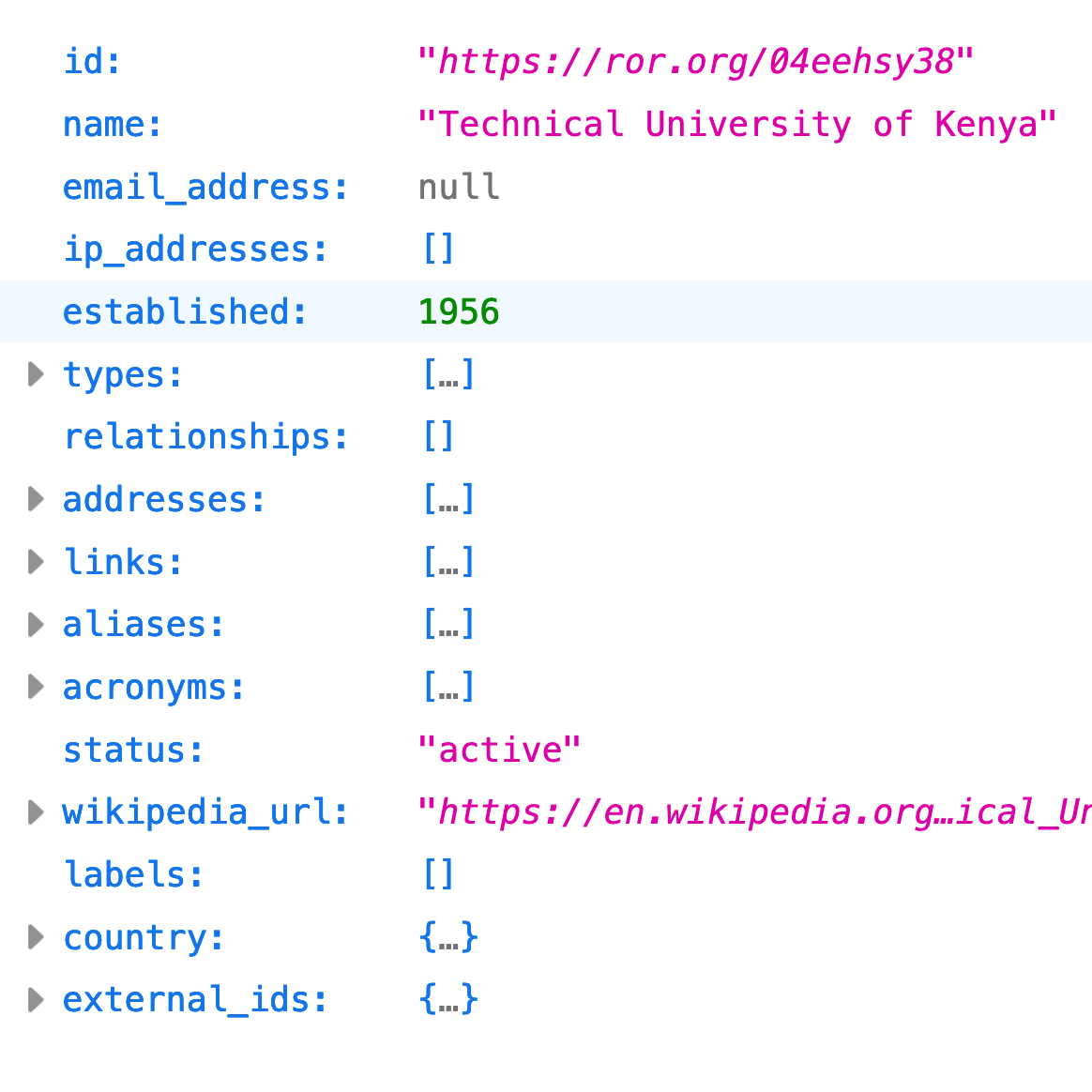
We’ve run several calls for feedback in 2022, but here’s one you’ll definitely want to chime in on: our draft proposal of major changes to the ROR data model for schema version 2.0. Comments are open until February 5, 2023, and we hope to release version 2.0 of the ROR schema and API in late 2023. When ROR diverged from GRID in March of 2022, it became possible for the first time to make changes to ROR’s data model. Our first priority was to handle inactive organizations and other organization status changes, and the community solution, as it turned out, didn’t involve any changes to the schema. We did the technical work to implement these organization status changes, and they were moved into production on December 1st, 2022. At the same time, knowing that both ROR’s data model and its API will need to change in the future, we asked for feedback on a proposal to handle schema and API versioning, and the ROR community agreed on a set of practices meant to make schema and API changes as painless as possible for ROR users.